
Exterior painting built for Pacific Northwest weather
Built on preparation, integrity and long-term protection. Our exterior process goes far beyond adding a fresh coat of color. It is about preserving the structure of your home and delivering a finish that truly lasts.
Exterior Painting
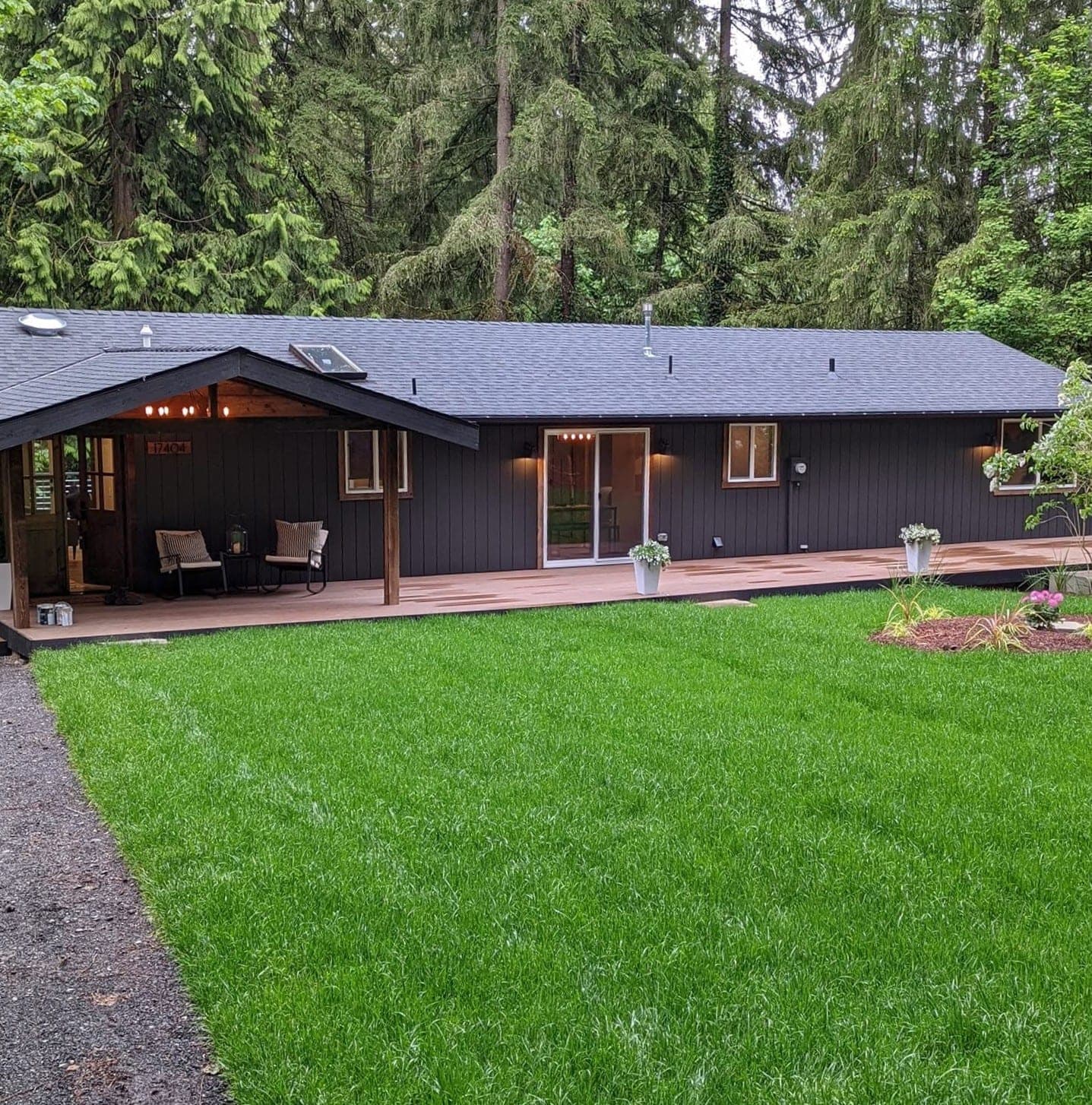
Our exterior painting process goes far beyond adding a fresh coat of color. It is about preserving the structure of your home and delivering a finish that truly lasts. We begin every project by pretreating the surface with a mild Jomax and bleach solution to safely eliminate mold, mildew and organic buildup. That ensures a clean, stable foundation before any other work begins.
From there we invest countless hours into the prep work that truly makes the difference: scraping failing paint, sanding edges smooth, feathering transitions, and addressing every square inch with intention. No corners are ever cut. Proper preparation is the backbone of a long-lasting exterior finish.
By the time paint touches the surface, you can be confident your home is protected, restored, and ready for a coating system that will stand up to the elements for years to come. The goal is safeguarding your home and delivering craftsmanship you can rely on.
Step 01
Pretreatment, done as chemistry rather than force
Every project starts with a mild Jomax and bleach solution, which safely eliminates mold, mildew and organic buildup rather than moving it somewhere else. An exterior in this climate is not fighting sunlight, it is fighting moisture and what grows in it, and a coating over living spores fails from behind no matter how good the paint was.
Pressure alone does not do that job. It relocates the growth and drives water up behind a lap while it works. So the solution does the killing, the pressure is matched to whatever the substrate can actually take, and then it dries properly. A wash on Tuesday and paint on Tuesday afternoon is not preparation, it is a schedule pretending to be one.
- Mild Jomax and bleach solution, mold and mildew killed
- Pressure matched to the substrate, not to the clock
- Rinsed clean and given time to dry through
- Landscaping wet down, covered and rinsed after
Step 02
Scrape, repair, caulk, prime
All substrates must be sound for a proper paint job. That is the whole thing in one sentence, and we take it seriously enough to act on it. Failing paint is scraped off, edges are sanded smooth, transitions are feathered, and bare wood is spot-primed rather than painted across.
If we find soft, damaged or rotten wood, it is replaced rather than patched over. We work closely with a trusted team of carpenters so every structural repair is done correctly and built to endure. None of this shows up in a photograph of the finished house. All of it shows up in year five.
- Failing coatings scraped, sanded smooth, transitions feathered
- Soft or rotten wood replaced, never patched over
- A trusted team of carpenters for structural repair
- Joints, penetrations and end grain caulked and sealed
Step 03
Strip, restore, brighten, sand, then stain
Cedar soffits, fascia and siding that get stained rather than painted. Benjamin Moore REMOVE Finish Remover takes the failed finish off, solid down to clear. Then RESTORE Wood Restorer removes dead wood fibers and the staining heavy mold and mildew leave behind. WOODLUXE Wood Brightener and Neutralizer then lifts tannin stains, rust stains and mill glaze.
Then it gets sanded, and the stain goes onto bare wood that is sound and dry rather than damp. Stain is not a coating that bridges anything, it sinks into whatever is under it. Anything left behind gets sealed under the stain.
- Three products in sequence, not one all-purpose cleaner
- Tannin stains, rust stains and mill glaze lifted
- Concentrated formulas diluted to the label
- Stain worked in by brush, soffits and fascia included
Step 04
Spray, back-roll, and watch the forecast
Body coats sprayed and back-rolled or back-brushed so the product is worked into the surface instead of sitting on it. Trim and detail cut by hand. Cut lines checked in daylight rather than under a work lamp at six in the evening.
And the weather gets a vote. Coats go on when the temperature and the dew point let them cure the way the manufacturer specified, which sometimes means a day of no progress and a phone call explaining why.
- Back-rolled or back-brushed, not just sprayed on
- Trim, sashes and detail cut in by hand
- Coats timed to temperature and dew point
- Daily cleanup, and the site left tidy over a weather delay
Before you sign
What your written scope covers
Same document on every job. A very clear scope of work ensures you know exactly what you are getting, and there is more on how we put one together over on our standard.
Get it in writing- Every elevation and surface listed, and what is excluded
- The pretreatment solution, and the dry time it needs
- Front doors and exterior millwork called out on their own
- Wood being restored and stained, and the products used
- Repair work priced where visible, flagged where it is not
- Products, primer and number of finish coats
- Working days, and how a weather delay gets handled
Often booked together
While we are already at the house
Exterior Cleaning
Three jobs that sell as one visit. Surfaces washed with a mild detergent that kills mold and mildew spores, glass and tracks cleaned inside and out, and gutters cleared by hand and flushed.
Read more →Interior Painting
Walls, ceilings, trim, doors and stairwells. Every piece of millwork prepped to PCA Level 3 or 4, every wall quoted at the level it can genuinely reach, and all of it written down before we start.
Read more →Concrete Grinding, Staining & Epoxy
Patios, walkways, garage floors and shop floors. Ground back to sound concrete, then coated, stained or sealed depending on what the slab will carry. The same preparation argument as everything else on this site.
Read more →
Get a written estimate for exterior painting
Free, and no pressure. Serving Everett, Marysville, Arlington, Lake Stevens, Snohomish and the rest of Snohomish County, plus North King County.