
Published November 2, 2026
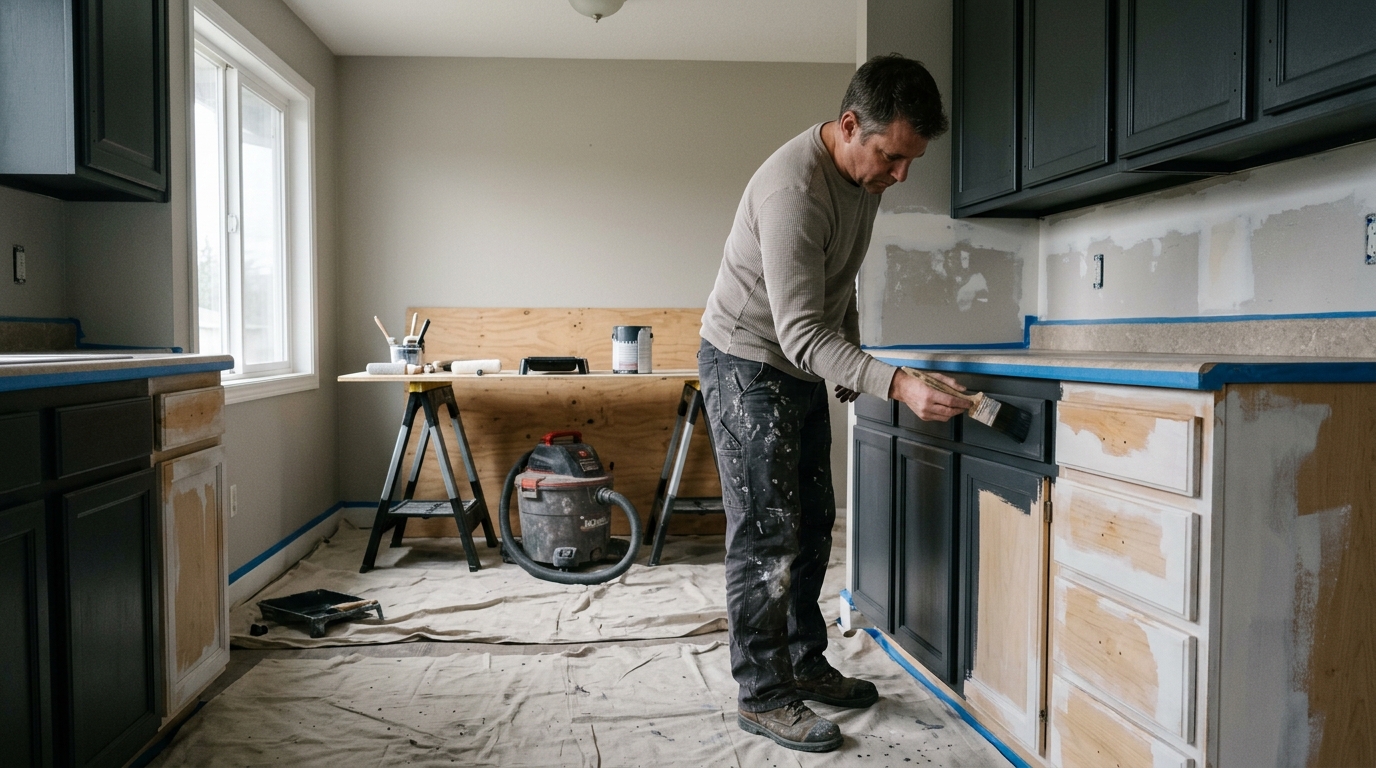
Refinishing, Painting, or Refacing: What Each Option Changes
When homeowners in Everett start researching kitchen cabinet refinishing, the first snag is vocabulary. Three terms get tossed around as if they meant the same thing, and they describe three different jobs.
Kitchen cabinet refinishing, in the strict sense, restores the surface you already have. On solid wood, that usually means stripping or sanding the old finish and applying new stain and clear coats so the grain stays visible. Painting covers the surface completely and suits a full color change. CertaPro draws the line this way: refinishing is best when the natural grain is a design feature, and painting is the move when you want a new color (CertaPro). Refacing is a separate service altogether. It means new doors and drawer fronts, with the cabinet boxes refinished to match, whereas refinishing keeps your original doors (Miracle Method).
Here is how we'd sum up what each option is best for:
- Refinishing (stain and clear coat): Best for solid wood or real-wood veneer in good structural shape where you like the grain. The wood stays the star.
- Painting: Best when you want a new color, or when the existing finish is tired, uneven, or mismatched. Almost any color is on the table.
- Refacing: Best when the doors themselves are the problem, such as a dated profile, warping, or damage. You get a new door style without a full tear-out.
Replacement is the fourth path, and it's worth naming because it changes the layout, not just the surface. If your kitchen's footprint works and the boxes are sound, refinishing or painting keeps the cabinetry you already own and puts the effort into the finish. Our crew handles the painting and refinishing side, so if you're weighing it against a remodel, start with our cabinet refinishing service page to see how we scope the work.
One honest limit applies to stain: you can't go lighter than what's already there. Lighter stains can't be applied over a darker natural color (Andrews Refinishing). If you want a pale look from dark wood, paint is usually the answer.
Solid Wood, Veneer, or Painted Doors: Which Method Fits
Your cabinets' material, and whatever is on them now, decides the method more than your preferences do. Identify the material before you collect a single quote.
Solid wood is the most forgiving candidate. It can be sanded, stained, clear-coated, or painted. If the grain is attractive, a stain-and-clear refinish keeps it. If the wood is dated or carries a heavy orange tone you dislike, paint changes the look entirely.
Real-wood veneer can also be refinished, but the veneer layer is thin, and aggressive sanding can burn right through it. Prep on veneer is about control, not removal. Refinishing works on solid wood and real-wood-veneer cabinets, which is why identifying the surface comes first (Andrews Refinishing). To tell the two apart, look at an inside edge or the back of a door. Continuous grain wrapping an edge suggests solid wood; a visible seam or thin layer suggests veneer.
Previously painted doors are the situation we see most. They can be repainted, but the existing coating has to be sound. Peeling, chipped, or greasy paint must be dealt with first, because new paint is only as secure as whatever it's stuck to. Cleaning and sanding come before anything else, and where the old coating is failing, expect more preparation.
Laminate and thermofoil fronts are a different conversation. They don't take stain, and getting paint to grip a slick surface is the whole challenge. If you're unsure what you have, we'll tell you plainly during the estimate whether your doors are a good candidate or whether refacing makes more sense.
Two practical points follow. The method should match the surface, not the other way around, and a confident contractor will say so when your cabinets aren't a fit for the finish you want. Condition matters as much as material, too. Water damage near the sink, swollen door edges, and loose hinges are repair items that belong in the scope, not surprises discovered mid-job.
What Proper Prep Looks Like and the P14 Level on Your Quote
Prep is the product. Nearly any kitchen cabinet refinishing finish looks good on day one, whoever applied it. What separates a lasting job from a peeling one is what happened before the first coat went on.
HGTV's how-to makes the core point: sanding removes the existing sheen or sealant so primer and paint can bond, with fine-grit pads suited to most cabinet fronts and rougher grit saved for heavy lacquer or shellac (HGTV). A professional system typically layers a cleaner, a cabinet-specific primer, and a topcoat. In practice, that means degreasing (kitchens are greasy places, especially near the range), removing doors and hardware, sanding, repairing dings, priming, and applying finish coats with proper cure time between them.
This is where a published prep scale helps you compare quotes. The PCA's P14 standard identifies four levels of surface preparation for repainting and maintenance projects (PCA P14, 2023). One secondary guide describes Level 1 as the minimum acceptable prep and Level 3 as focused on finish appearance, with added smoothness standards (Graduate Painting). The standard itself says the level you choose should balance appearance against cost (PCA P14, 2019).
A fair caution: P14 was written for architectural surfaces in general, not for cabinets specifically. We use it as a common language for what preparation is included, not as a cabinet-only certification. Its value is that a level written into your quote turns "we'll prep it well" into something you can check against a published reference.
If a quote doesn't name a level at all, ask what's included. Some references say an unstated spec is assumed to mean Level 2, but that line comes from a mirrored copy and should be verified against the official PCA document before anyone relies on it. The safer habit is to have the level written down. You can read how we apply the scale on our PCA P14 prep levels page, and we put the chosen level in writing on every estimate.
Pacific Northwest Conditions: Humidity, Scheduling, and Permits
Most of what's written about kitchen cabinet refinishing comes from other climates. Here in Everett and the rest of Snohomish County, a few local realities shape how a job should be planned. The national guides we reviewed say little about any of this, so what follows is practical experience and common sense, not citations.
Humidity and moisture. Our damp months matter to anything that cures. Coatings need time to dry and harden between steps, and a cool, humid kitchen slows that down. A good plan builds in cure time rather than rushing a second coat, and keeps the kitchen ventilated and at a reasonable temperature while the finish sets. Ask any contractor how they handle drying and when you can safely use the doors again. Cured and merely dry-to-touch are not the same thing.
Scheduling. Cabinet work disrupts a kitchen, so you'll want to know the sequence. Doors and drawer fronts are usually removed and finished while the boxes are done in place, which means a stretch when the kitchen is partly out of service. Plan your meals around it, and ask for a written timeline that accounts for prep, coating, and cure instead of a single vague number of days.
Older homes and dust control. Many homes in our area predate modern paint formulations. Sanding old finishes creates dust, and in an older house that's reason enough to ask directly about containment and cleanup. We haven't researched lead-paint rules for this article, so if your home was built before the late 1970s, confirm current requirements with the relevant state or federal agencies and ask any contractor how they handle it.
Permits and HOA rules. Refinishing or painting existing cabinets generally isn't a permit-heavy job the way structural work is, but we haven't verified local permitting specifics here. If you live in an HOA community or a condo, check your covenants before changing colors on anything visible. A quick call to your city or association is cheap insurance.
How to Choose and How to Read a Written Cabinet Estimate
Once you understand the options for kitchen cabinet refinishing, choosing comes down to a handful of concrete criteria. Use them to compare any two quotes side by side.
Does the method match your material? The estimate should say whether your cabinets are solid wood, veneer, or previously painted, and why the proposed method fits. If a contractor proposes stain over dark wood to get a lighter color, that's a red flag.
Is the prep spelled out? Look for cleaning, degreasing, sanding, repairs, and a named primer, not just "paint cabinets." Ask which P14 level the quote assumes and what that level includes.
Is the scope itemized? A good estimate lists what's covered: doors, drawer fronts, frames, boxes, interior surfaces, and hardware removal and reinstallation. Whether cabinet insides are included is a common point of confusion, so make sure it's written down.
What are the coats and finish? The quote should name the system (primer, topcoat, sheen) and the number of coats. Sheen matters in a kitchen because glossier finishes show wear and fingerprints differently than matte ones.
What's the timeline and cure plan? Ask for the sequence and cure time in writing, plus when it's safe to resume normal use.
Who's doing the work, and are they covered? Confirm the contractor is licensed, bonded, and insured. We are, with 20-plus years in business, and you can see recent results in our portfolio and hear from neighbors on our testimonials page.
What happens if something changes? Hidden damage, like swollen edges or failing old paint, can alter the scope. A clear estimate explains how changes are handled before work begins, not after.
Don't expect us to quote prices in a guide like this. Honest numbers depend on your kitchen's size, its condition, and the prep level you choose. What we can promise is a written scope that shows exactly what's included. If that's the kind of estimate you want, request a written estimate and we'll walk your kitchen with you. If you're also weighing broader updates, our services overview shows how cabinet work fits alongside interior painting and drywall repair, and the community giving built into every job is part of how we do business in Everett.