
Published October 30, 2026
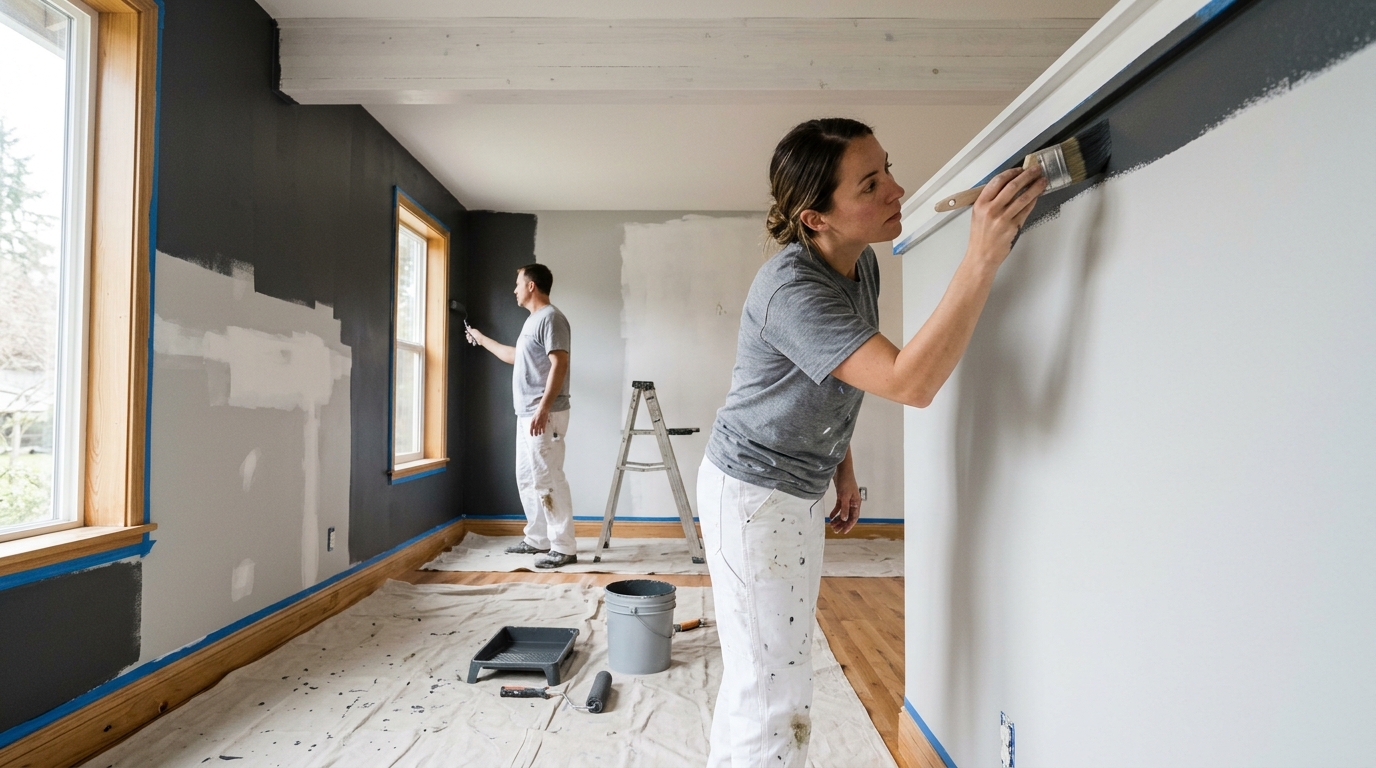
What a Written Interior Painting Contract and Estimate Should Include
If you're planning on painting interior home spaces this month, you're in good company. November is when people start calling painters. The rain has settled in, the windows stay shut, and with the holidays close, a freshly painted living room or dining room suddenly feels urgent. That urgency is when homeowners skip steps and sign the first paper put in front of them. A good contract slows you down in the right places.
An estimate and a contract are related, but they aren't the same thing. The estimate says what the painter proposes and what it costs. The contract is what you both sign, and it should carry the estimate's details forward so nothing you were promised lives only in conversation. Whichever document you're holding, look for these:
- Business identity. The legal business name, address, phone number and L&I registration number, matching what you'll verify later.
- Room-by-room scope. Which rooms, which surfaces (walls, ceilings, trim, doors, closets), and which are excluded. "Paint interior" is not a scope.
- Prep described in specific terms. Patching, caulking, sanding, priming and spot-priming, stated plainly. More on this below.
- Materials. Paint brand, product line, sheen and number of coats for each surface. Ceilings, walls and trim often take different products.
- Colors. Color names and numbers, ideally confirmed with a sample on your wall.
- Protection and furniture. Who moves what, how floors and furnishings are covered, and who handles cleanup.
- Schedule. A start date, an expected duration, and what happens if weather or a delivery pushes things back. Interior work doesn't care about rain, but a damp November can still slow drying times.
- Price and payment terms. A total price, a reasonable deposit rather than the whole job up front, and the milestones that trigger further payments.
- Change orders. A written process for adding work, with the price agreed before the extra work happens.
- Warranty. What's covered, for how long, and what voids it.
Angi advises collecting written estimates from at least three contractors. That's sound advice, but only if the three describe the same job. If one lists patching and priming and another just says "two coats," you're comparing different products at different prices. Ask each painter to bid against the same room list so the numbers mean something. Our estimate page walks through what we put in writing, and our interior painting service page outlines the work we typically scope.
Verifying a Washington Painter's L&I Registration, Bond and Insurance
A friendly painter with a convincing truck is not the same as a registered contractor for painting interior home projects. Washington requires contractors who work, advertise or bid in the state to register with the Department of Labor & Industries (L&I), post a surety bond and carry liability insurance. According to the L&I contractor brochure, that applies to anyone doing the work, not only large firms.
It helps to know what each safeguard does, because people mix them up. The bond protects you, the customer, if a contractor abandons a job or breaks the rules. Insurance protects the contractor against accidents and damage. A bond is not insurance, and insurance is not a bond. You want both.
On the numbers, sources disagree. An older L&I-derived brochure lists a $6,000 bond for specialty contractors such as painters, while newer sources put it at $15,000 for specialty contractors. Treat $15,000 as the current figure, but confirm it on L&I's website, since requirements change. The same source lists required liability coverage of $200,000 public liability plus $50,000 property damage, or $250,000 combined single limit.
Checking takes about five minutes:
- Use L&I's "Verify a Contractor" lookup. You can search by business name, registration number or UBI number.
- Confirm the registration is active and that the business name matches the one on your contract. A mismatch is worth a question.
- Review the bond and insurance details, and look at the history for lawsuits against the bond or violations.
- Ask the painter for a certificate of insurance, then confirm it with the insurer rather than trusting a photocopy.
This guide to Washington contractor insurance and bond requirements lays out the same lookup steps. If a painter hesitates to give you a registration number, that tells you something. We're licensed, bonded and insured in Everett and happy to hand over the paperwork. You can read more about who we are on our about page.
Reading the Prep Line in a Quote Against PCA P14 Levels 1 to 4
Most of the gap between a good paint job and a disappointing one is invisible the day the painter leaves, because it happens before the first coat. Prep is also where bids for painting interior home projects quietly diverge. Two quotes can show the same square footage and the same paint, yet one includes hours of filling and sanding while the other includes a quick wipe.
The industry gives you a yardstick. The Painting Contractors Association's PCA P14 standard defines four levels of surface preparation for repainting, from Level 1 (Basic) to Level 4 (Supreme). It was written partly to set criteria for estimating, and it says plainly that the level you choose affects both the look of the finish and the cost. That's your lever as a buyer. A prep level is a decision you make, not a mystery the painter handles for you.
Here's how to use it when reading a quote:
- Look for a named level or a plain description of the work. "Level 2 prep" and "patch all nail holes, sand glossy trim, spot-prime stains" are both fine. "Prep included" is not.
- Match the level to the room. A rental hallway and a dining room under strong window light don't need the same treatment. Raking light, like low winter sun through a west window, exaggerates every ridge and patch, which is worth remembering in November when the light turns low and long.
- Understand the ceiling on Level 4. The PDCA version of P14 says Level 4 is normally recommended only on surfaces rated DSD-0 to DSD-2, meaning sound or lightly worn. Walls in worse shape (DSD-3 or DSD-4) call for restoration or resurfacing, not ordinary repaint prep. If your drywall is cracked, water-stained or crumbling, expect a repair line item, which our drywall repair service covers.
To be clear about what's industry practice and what's ours: quoting prep against P14 Levels 1 to 4 in writing is how Painting with Purpose chooses to work. Not every painter does it, and you shouldn't assume a competing quote includes it. You can see how we apply the levels on our standards page. Whoever you hire, ask every painter to state the prep in terms you can compare.
Lead-Safe Rules for Pre-1978 Homes and What to Expect During Prep
A lot of the housing around Everett and Snohomish County predates 1978, the year lead-based paint was banned for residential use. If your home is older, the contract for painting interior home rooms should address lead before anyone picks up a sander.
The EPA's Renovation, Repair and Painting (RRP) Rule applies to paid work that disturbs lead-based paint in pre-1978 homes and child-occupied facilities. According to the EPA enforcement alert, firms can't do covered renovation work in those homes without proper training, certification and lead-safe work practices. The EPA takes this seriously enough that it has enforced the rule against large national firms, not just small ones.
What that means for you as a homeowner:
- Ask whether the painter is RRP-certified before the estimate, not after. The EPA's guidance is to hire a contractor certified under the EPA's or the state's program.
- Expect the "Renovate Right" pamphlet. Contractors must give occupants this EPA pamphlet before work begins. If your painter never hands you one on an older home, ask why.
- Know the trigger. Common guidance puts the threshold at disturbing more than 6 square feet of interior paint per room, though you should check the specifics against EPA materials. Sanding and scraping during prep are exactly the activities that can cross it.
- Look for containment in the scope. Lead-safe prep typically means plastic sheeting, sealed vents, wet methods instead of dry sanding, and careful cleanup, not a quick vacuum. Those steps take time, and they belong in the estimate.
In practice, a lead-safe job can run longer and cost more than the same job in a 1995 home. If someone quotes a pre-1978 house the same as a newer one and never mentions lead, follow up. Families with young children, or anyone pregnant, have the strongest reason to insist on it.
Why Interior Painting Bids Differ and Booking a November Project in Everett
If three quotes for painting interior home work arrive with wildly different totals, the gap is rarely random. The usual causes are scope, prep level, materials, crew model and overhead. One bid may include moving furniture and patching, while another assumes you've cleared the room. One may use a premium paint in two coats, while another uses a builder-grade product in one. A registered, bonded and insured business also carries costs an unregistered operator doesn't, which is part of why the cheapest number deserves scrutiny rather than celebration.
Be careful with national price averages. Angi's 2026 figure of $2,022 for interior painting, with most projects between $965 and $3,089, blends single-room jobs with whole-home work, and other sources put whole-home projects at $3,500 to $10,000. None of those are Puget Sound prices, so use them as a sanity check, not a budget. Only a written, itemized local estimate gives you a number that applies to your house.
Timing matters too. November is a smart season for interior work because the weather can't interrupt it, but it's also when calendars fill ahead of the holidays. If you want rooms finished before guests arrive, here's a rough sequence:
- Gather three written estimates against the same room list.
- Verify each painter on L&I and request the insurance certificate.
- Confirm prep level and, for older homes, RRP certification.
- Choose colors early, since sample-testing in low winter light takes longer.
- Sign a contract with dates, payment milestones and a change-order process.
An honest painter will tell you if a December finish is unrealistic. You can browse our portfolio and read reviews from Everett homeowners to see how local jobs turned out, then request an estimate once you've settled on the scope. A clear contract won't make the project effortless, but it will keep the surprises small.